AdAlta gets commercial-ready after pre-clinical safety studies show promising results

AdAlta (ASX: 1AD), the Australian biotechnology company pioneering new ‘i-body’ antibody technology, is gearing up to commercialise its lead drug program, AD-114, and enter the clinic following three successful pre-clinical safety studies.

Pre-clinical safety studies have shown AD-114, being developed to treat idiopathic pulmonary fibrosis (IPF) to be well-tolerated, with no mortalities or adverse effects.

AdAlta’s Managing Director and CEO, Sam Cobb commented: “We were very pleased with the way that AD-114 performed in our third non-human primate study. No off-target effects were observed – an encouraging sign that we may have a better therapy to offer IPF patients who currently have to live with the many unwanted side effects of the only two treatments currently on the market.

“A fourth toxicology study is expected to be completed in the first half of 2018.  That will complete the package of preclinical information required before AD-114 can move into human trials.  The final non-human primate study and clinical data will be required for the package of data that potential pharma partners will want to see.”

The i-body AD-114 differs from existing treatment options and others currently in clinical development as it binds to the chemokine receptor CXCR4. The target CXCR4 is expressed at low levels or absent in healthy tissue and is increased and at high levels in tissue affected by a number of disease states, including fibrosis. AD-114 is the only anti-CXCR4 drug candidate being developed for the treatment of fibrosis.

This month, AdAlta announced that it had been granted a key Australian patent to protect the use of AD-114 for the treatment of a number of diseases, including fibrosis. AdAlta has a portfolio of international and local patents protecting both its i-body platform and AD-114.

AdAlta also announced this month that it had signed a commercial agreement with German-based XL-protein GmbH, granting exclusive rights to apply PASylation® technology to extend the half-life of AD-114 in the human body. PASylated AD-114 will enable less frequent administration of AD-114 in the clinic, making it ideal for treating chronic conditions such as IPF.

AD-114 has been described by world-leading lung disease researcher Professor Cory Hogaboam from Cedars Sinai Medical Centre in the USA, as “hitting the sweet spot” and providing “a compelling case” for treating IPF. Earlier this year, AD-114 was spotlighted as a novel therapeutic approach to treating IPF at the inaugural global IPF Summit, where AdAlta presented alongside top researchers and drug developers from around the world.

AD-114 has been granted orphan drug status by the US FDA, and if approved, would be a first-in-class treatment. ‘Orphan’ drugs are those developed to treat a rare medical condition, and they are usually granted accelerated development and regulatory timelines.

“We’ve achieved so many significant milestones this year in the development of our lead i-body AD-114 and the platform provides further opportunity,” Sam Cobb said. “With a library of over 20 billion i-bodies, we have an opportunity to identify a therapeutic pipeline of drugs.”

IPF Profile – Glen Westall

Associate Professor Glen Westall – specialist respiratory and transplant physician

Associate Professor Glen Westall has worked in the field of lung fibrosis for more than 15 years, published over 70 original research manuscripts and co-authored 8 book chapters in the field of lung fibrosis and lung transplantation.

Yet despite his extensive knowledge about the disease, Idiopathic Pulmonary Fibrosis (IPF) can still surprise him.

“Medical text books suggest that most diseases behave similarly, however the human experience tells us otherwise,” said Assoc. Prof Westall.

“Some patients with IPF can be stable for decades, whilst others often have a very aggressive disease that deteriorates rapidly.”

A highly regarded specialist based at The Alfred, Assoc. Prof. Westall’s interest in lung fibrosis was sparked more than 15 years ago when he worked in London as a registrar in the Royal Brompton Hospital’s Lung Fibrosis service under two giants in the field, Prof Ron du Bois and Prof Athol Wells.

“Back then, we had no treatments for IPF, we were heavily involved with clinical trials, recognising that without treatment, IPF was a progressive and typically fatal condition.

“We are entering an exciting era for lung fibrosis. We now have two antifibrotic agents, Nintedanib and Perfenidone that are available in Australia. More importantly, there are a large number of phase 1 and phase 2 studies running or in the pipeline evaluating new antifibrotic agents”

“Whilst we are making progress, there remains much work that still needs to be done in understanding IPF, both at a patient and a scientific level.”

Pulmonary Fibrosis Awareness Month 2017

September is global Pulmonary Fibrosis Awareness Month.

We’re pioneering a novel treatment for IPF called AD-114, and we’re proud to be working alongside global experts in the field.

To raise awareness of IPF throughout September, we’re shining a spotlight on the following local heroes carrying out globally recognised work to better understand and treat IPF, and sharing patient stories, as told in their own words.

About IPF

Bill Van Nierop – Lung Foundation Australia Supporter and IPF Patient

Max Tabbaa – Idiopathic Pulmonary Fibrosis Patient

Anne Holland – Professor of Physiotherapy, La Trobe University and Alfred Health

Stan Holden – Pulmonary Fibrosis Patient

Associate Professor Mick Foley – AdAlta Chief Scientific Officer

Glen Westall – Specialist Respiratory and Transplant Physician


About IPF

Idiopathic pulmonary fibrosis (IPF) is a rare fibrotic lung condition that causes persistent and progressive scarring of the tiny air sacs (alveoli) in the lungs, with symptoms including shortness of breath and coughing[1]. Lung Foundation Australia estimate that there are around 2,300 new cases diagnosed in in Australia every year[2]. The prognosis of IPF is very poor, with a median survival of only three to five years after diagnosis.[3]

There are just two treatments on the market and the disease continues to progress in the majority of patients despite treatment.[4]


“We have a mantra that IPF will impact our lives, but it will not impact how we live our lives.” – Bill Van Nierop, 64, Redland Bay

I was originally diagnosed with potential IPF in March 2015, when some indicators were noticed on an X-Ray and a subsequent CT scan I’d had to ensure a bout of pneumonia had cleared up.

I had an inkling that something might be amiss when my GP’s surgery called the day of my CT scan to say my doctor wanted to see me ASAP, and they had made an appointment for 8.40am next morning. I thought: They don’t usually do that to advise all is okay!!

In my case, confirmation of the likely presence of early stage IPF was a little scarier initially, as my older sister had been through what was then called Interstitial Lung Disorder, which I’m guessing is very similar. This meant I was aware of disease progression and potential outcome. It was not confirmed immediately and I was fortunate to have a very proactive GP who arranged an appointment with a lung physician.

At this point, my reaction was more about “well, maybe I don’t”, as I had no noticeable symptoms to my mind. Oh, there was the change in my ability to swim a reasonable distance without getting breathless, which I had put down to just age. I was 62, after all. After a few interesting weeks and an open lung biopsy, my lung physician confirmed the presence of early stage IPF. I guess I wasn’t overly surprised. I’d noticed the ‘clubbing’ of some of my nails sitting in a motel room in Dubbo the week previous, and a quick trip to ‘Dr Google’ confirmed this as a possible symptom. The confirmed diagnosis did still take the wind out of my sails.

Being ‘idiopathic’ in nature, there is no clear cause. Like many baby boomers, I did smoke for 10 years, giving up in 1981. In fact the lung biopsy showed no evidence of smoking, and there is virtually nothing in my background that ‘leaps’ out as a contributing cause. Whilst my sister has something very similar, I’m reliably informed that in my case it is extremely unlikely to be genetic.

After diagnosis I set about learning all I could about the disease, in terms of progression, impact of exercise, diet, potential treatments and of course my lifestyle and ability to carry on a ‘normal’ working life. Lung Foundation Australia (LFA) are an incredible organisation in terms of support, information and creating awareness of IPF. I am currently an advocate and volunteer for LFA.

I had an exercise regime based on walking prior to diagnosis, but anecdotal evidence suggested exercise with available treatments had certainly had benefits for a number of IPF sufferers around the world. As a result, I increased walking daily to at least 90 minutes and swimming for much of the year.

Living with IPF is impacted by available treatments, and I was placed on a trial medication within months, which has slowed progress of the disease but can have significant side effects.

In my role I travel interstate through rural areas, and find fatigue from IPF can be an issue in managing lifestyle, and commitments. My wife and I have a mantra that IPF will impact our lives, but it will not impact how we live our lives. I continue to work, exercise, and we travel both domestically and internationally to do those things we we want to. It just requires a little more planning to manage any potential side effects and fatigue.

There are really only two viable treatments currently available for IPF in Australia, and I believe anywhere in the world. These drugs can slow progression by up to 50%, and in my case of early phase, appear to have worked as intended, and delivered the results to this point. Because of the lack of awareness of lung disease, and the real stigma attached to having a lung disease, available funds for research projects are difficult to access, and this area seems to come at the end of the available funds available from public donations.

As a result of lack of awareness, stigma and lack of available funding, I have tried to have some small impact since diagnosis to assist LFA and others, initiating and supporting some events in the public domain. In 2016, my wife and I completed the Sydney city2surf, raising funds for Lung Foundation Australia and embarking on an awareness campaign through my employer, AGnVET Services, who have a number of rural stores across NSW, Qld and Victoria.

Following some success with this, I initiated my ‘Long Walk for Lungs’ with the support again of AGnVET and Lung Foundation Australia. This event was supported by major suppliers to the agricultural industry as sponsors, and a host of rural community events. Between 14 August, and 1 September, I walked 700kms around central NSW, at an average of 45kms per day, and talking to groups, individuals, selling raffle tickets in pubs and clubs, and providing interviews on Prime TV, and ABC rural programs. In a small way we created awareness of IPF, and lung disease in general, tackled the stigma, and raised just over $100k for Lung Foundation Australia to support a number of initiatives.

IPF is virtually unknown in Australia, patients are often reluctant to talk about it, it is often still misdiagnosed, and many patients are still provided little information about their disease, potential treatments and the importance of lifestyle and exercise in the process. We do not talk about lung disease, we often ‘shame’ those diagnosed, and generally fail to have empathy as we do with other illnesses. This is despite the fact that more Australians lose their battle with IPF each year than with some of the more known, chronic, rare diseases.

I intend to do keep doing my bit to change the way we think about IPF.


“They told me I had five years to live.” – Max Tabbaa, 74, Albert Park

Max went to see a doctor about four years ago because of a chronic cough that both he and his wife were sick of dealing with. After a few x-rays and scans, he was told that he had lung, heart and stomach issues. A lung biopsy undertaken during an angiogram showed that he had IPF.

“They told me I had five years to live,” he said. “I don’t want to be in a nursing home, I want to go straight to palliative care and let me die in peace. When the time comes, when I cannot breathe anymore, let me go.

I would try a new treatment, depending on the side effects and how long it would give you.

I’m on morphine liquid and tablets, and I’m lucky I still don’t need oxygen.

The cough is there all the time. I feel now that I am counting down the days, which is stressful for me and my wife.”


Anne Holland, Professor of Physiotherapy, La Trobe University and Alfred Health

Anne Holland led the first clinical trial of pulmonary rehabilitation for people with idiopathic pulmonary fibrosis (IPF), which had published outcomes in 2008.

Pulmonary rehabilitation is now a recommended treatment for people with IPF, with patients receiving an individually tailored program of exercise and education designed to reduce their symptoms, improve fitness and enhance wellbeing.

As a physiotherapist working in pulmonary rehabilitation, I could see its benefits for people with other chronic lung diseases, but there were no clinical trials to test whether it worked in IPF,“ Anne said.

“Pulmonary rehabilitation improves how patients feel and function. New drugs have brought hope for people with IPF as they slow the progression of disease, but they don’t improve quality of life, and not all patients are eligible.

“Pulmonary rehabilitation is an important treatment because it makes people with IPF feel better, and the vast majority of patients are eligible to take part.

“People with IPF live with distressing symptoms, particularly breathlessness and cough. Being very tired is another common symptom. Whilst some symptoms are directly related to the lung condition, some are related to the reduction in strength and fitness that occur when someone becomes unwell.

“One of the benefits of pulmonary rehabilitation is that it allows patients to improve their strength and fitness, in a safe environment, under the supervision of experts. People with IPF are often pleasantly surprised about how much exercise they can do by the end of a pulmonary rehabilitation program, and how much better it makes them feel.”

“Treatments that can improve how people with IPF feel and function are urgently needed. It’s great that we now have treatment options for IPF, but more research is needed to come up with better ones. IPF Awareness Month is a great opportunity to talk about that.”


“After they did all their scans, they showed me my lungs, and I didn’t like the look of them.”
– Stan Holden, 75, Port Melbourne
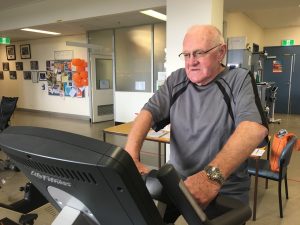
I’ve been short-winded and what have you for a fair while, and I’ve had a few episodes in the hospital lately, over the past six to nine months. After they did all their scans, they showed me my lungs, and I didn’t like the look of them.

There were lots of holes in them and scarring. Some of the scarring was my rheumatism, some probably by asbestos, and that was a bit worrying to me. That was about two months ago.

They asked me to go into this program at The Alfred. I go there twice a week and do exercises, and every week or so they up the exercise. It’s riding bikes and going on the treadmill for about 15 minutes. They take your heart rate before you start and three times during the ride, and then afterwards. Twice a week. But it doesn’t worry me.

I am 75 years old and have been reasonably healthy over the years. As a child I had rheumatic fever and was told it would not affect me later in life, but it has always left me short-winded. I couldn’t keep up with sports. When all the other kids would run around the park, I couldn’t.

I’ve probably got a few bad habits – I smoked since I was about 10 or 11 years of age until I was about 45 or 50. I haven’t smoked for 25 years. They told me the damage was done.

The funny part about it is that I go for a walk every morning with the dog for half an hour and in the afternoon, and it doesn’t seem to worry me, but when I get up of a night to go to the toilet and then lie back down, I’m gasping for air as soon as I lay down.

I did ask them if I would have to have any medical operations or what have you, they told me this will just see me out.

It’s all so new to me. I’m only just learning about it all.


Associate Professor Mick Foley – AdAlta Chief Scientific Officer
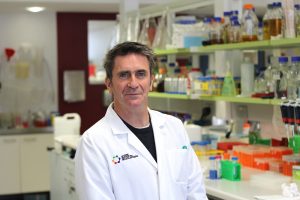
Reflecting on the moment in time when he realised the potential for our lead i-body candidate, AD-114, to treat fibrotic conditions such as idiopathic pulmonary fibrosis, AdAlta’s founding scientist Associate Professor Michael Foley said:

“Science is often a slow build up and, while you always have hope, you can never be sure it’s going to work. When we showed that mice given a fibrosis-causing chemical no longer developed fibrosis when also given our AD-114 i-body – that was when I thought that we just might have something after all.”

Associate Prof. Foley is an internationally recognised leader in phage display, the technology used to screen AdAlta’s i-body library to identify new drug candidates, and he’s published over 70 scientific publications.

“I’ve always been fascinated by antibodies and how they can protect us by binding to specific molecules on microbes,” he said.

“Back at around the late 90’s, the scientific community were trying to construct antibodies that could target various diseases, not just infections. So when colleagues and I developed the “i-bodies”, which are small antibodies inspired by the ones found in sharks, I was keen to see if they would work against important diseases like fibrosis.”

The study on the effects of AD-114 on mice with fibrosis was carried out in 2016.

“We believe that AD-114 is going to be a novel approach to lung fibrosis, one that has not been applied by any other company,” Associate Prof Foley said. “We have also shown encouraging results in the laboratory on other fibrotic conditions, for example in the eye and liver.

“But I’m afraid that science is not always as quick as we would like, and since these i-bodies are a new approach there is some more work we have do to do be absolutely sure they are safe and how best to administer them.

“Two drugs, Nintedanib and Pirfenidone are available now and while they are very important, I think it’s fair to say that have limitations, and they don’t work for all patients. However there have been some very encouraging results from phase 2 trials for new agents that target fibrosis. Hopefully soon there will be several options for patients with this disease, including AD-114.”


Associate Professor Glen Westall – Specialist Respiratory and Transplant Physician
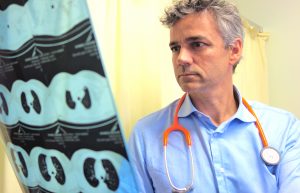
Associate Professor Glen Westall has worked in the field of lung fibrosis for more than 15 years, published over 70 original research manuscripts and co-authored 8 book chapters in the field of lung fibrosis and lung transplantation.

Yet despite his extensive knowledge about the disease, Idiopathic Pulmonary Fibrosis (IPF) can still surprise him.

“Medical text books suggest that most diseases behave similarly, however the human experience tells us otherwise,” said Assoc. Prof Westall.

“Some patients with IPF can be stable for decades, whilst others often have a very aggressive disease that deteriorates rapidly.”

A highly regarded specialist based at The Alfred, Assoc. Prof. Westall’s interest in lung fibrosis was sparked more than 15 years ago when he worked in London as a registrar in the Royal Brompton Hospital’s Lung Fibrosis service under two giants in the field, Prof Ron du Bois and Prof Athol Wells.

“Back then, we had no treatments for IPF, we were heavily involved with clinical trials, recognising that without treatment, IPF was a progressive and typically fatal condition.

“We are entering an exciting era for lung fibrosis. We now have two antifibrotic agents, Nintedanib and Perfenidone that are available in Australia. More importantly, there are a large number of phase 1 and phase 2 studies running or in the pipeline evaluating new antifibrotic agents”

“Whilst we are making progress, there remains much work that still needs to be done in understanding IPF, both at a patient and a scientific level.”


[1] Lung Foundation Australia [online] at http://lungfoundation.com.au/health-professionals/idiopathic-pulmonary-fibrosis-registry/ [accessed 3 August 2017]

[2] Lung Foundation Australia [online] at http://lungfoundation.com.au/patient-support/rarelung/idiopathic-pulmonary-fibrosis-ipf/ [accessed 3 August 2017]

[3] ATS, 2000; Raghu et al., 2011

[4] Tzouvelekis A, Bonella F, Spagnolo P, ‘Update on Therapeutic Management of Idiopathic Pulmonary Fibrosis’, Therapeutics and Clinical Risk Management, 2015 Mar 3;11:359-70. doi: 10.2147/TCRM.S69716. eCollection 2015

Compelling new lung disease treatment pioneered in Victoria gains global attention alongside top researchers and drug developers

A novel drug treatment emerging from Victoria for the serious lung condition idiopathic pulmonary fibrosis will be spotlighted among world-leading researchers and scientists at the global IPF Summit in Boston (August 20-21).

Idiopathic pulmonary fibrosis (IPF) is a rare fibrotic lung condition that causes persistent and progressive scarring of the tiny air sacs (alveoli) in the lungs, with symptoms including shortness of breath and coughing[1]. Lung Foundation Australia estimate that there are around 2,300 new cases diagnosed in in Australia every year[2]. The prognosis of IPF is very poor, with a median survival of only three to five years after diagnosis.[3]

There are just treatments on the market and the disease continues to progress in the majority of patients despite treatment.[4]

The new drug, AD-114, is being developed by the Australian biotech AdAlta (ASX:1AD), using AdAlta’s proprietary ‘i-body’ technology. A phase 1 clinical trial will start next year.

AD-114 differs from existing treatment options and others currently in clinical development due to its unique mode of action that targets the GPCR chemokine receptor CXCR4. AD-114 has been demonstrated to have both anti-inflammatory and anti-fibrotic activity, hitting a sweet spot for a potential therapy for IPF.

The effects of AD-114 have been described by world-leading lung disease researcher Professor Cory Hogaboam (Cedars Sinai Medical Centre) as “impressive” and “providing a compelling case” for treating IPF.

AdAlta CEO, Sam Cobb, has been invited to speak at the inaugural summit to showcase the novel therapeutic approach to this largely under-treated area. Ms Cobb will represent the only Australian company in the line-up of academics, international biotech and pharma speakers that include Prof Hogaboam as well as speakers from Genentech, Bristol-Myers Squibb, Celgene and Medimmune.

“IPF is a disease with high unmet clinical need and we do believe AD-114 will provide the clinical community and patients with a much-needed new treatment option,” Ms Cobb said.

“Although our focus with AD-114 is IPF, AD-114 has the potential to treat a wide-range of fibrotic conditions including wet age-related macular degeneration, of which there are 21,000 new cases diagnosed in Australia each year[5] and non-alcoholic fatty liver disease, which affects around 5.5 million Australians and is a precursor to nonalcoholic steatohepatitis (NASH)[6].

“That we’ve been invited to speak alongside world experts at the inaugural IPF Summit is immensely validating of the critical nature of our work.”

AD-114 has received orphan drug status by the FDA, and if approved would be a first-in-class treatment. ‘Orphan’ drugs are those developed to treat a rare medical condition, and they are usually granted accelerated development and regulatory timelines.

More about the IPF Summit: http://ipf-summit.com/

More about AdAlta: http://adalta.com.au/


[1] Lung Foundation Australia [online] at http://lungfoundation.com.au/health-professionals/idiopathic-pulmonary-fibrosis-registry/ [accessed 3 August 2017]

[2] Lung Foundation Australia [online] at http://lungfoundation.com.au/patient-support/rarelung/idiopathic-pulmonary-fibrosis-ipf/ [accessed 3 August 2017]

[3] ATS, 2000; Raghu et al., 2011

[4] Tzouvelekis A, Bonella F, Spagnolo P, ‘Update on Therapeutic Management of Idiopathic Pulmonary Fibrosis’, Therapeutics and Clinical Risk Management, 2015 Mar 3;11:359-70. doi: 10.2147/TCRM.S69716. eCollection 2015

[5] Macular Degeneration Foundation [online] at https://www.mdfoundation.com.au/sites/default/files/MDBooklet_2017-04_WEB.pdf [accessed 7 August 2017]

[6] The Economic Cost and Health Burden of Liver Disease in Australia (Jan 2013), Gastroenterological Society of Australia)

Fellowship supports search for new disease treatments

La Trobe University and leading Australian biotech company AdAlta have received new funding to identify and develop potential treatments for a range of human diseases using the company’s novel class of drugs, known as i-bodies.

La Trobe University’s Dr Chris Hocking has been awarded a Science and Industry Endowment Fund (SIEF) Business Fellowship worth $427,000 ($210,000 from the CSIRO), further strengthening the collaboration between La Trobe University and AdAlta.

The SIEF Business Fellowship Program aims to build deeper connections and collaborations between researchers and industry, accelerate the adoption of new ideas and technology, while also helping to grow into larger and more profitable organisations. Furthermore, the program provides practical industry experience for early career researchers.

The SIEF Fellowship grant will support Dr Hosking’s work with AdAlta’s Chief Scientific Officer, Professor Mick Foley, at the La Trobe Institute for Molecular Science.

“Under the SIEF grant we will screen the i-body library to identify and develop new i-body candidates against difficult to access drug targets, such as complex signalling proteins called GPCRs,” Professor Foley said.

“Chris is an excellent candidate for the Fellowship because he has extensive experience working with phase displays and screening libraries. Chris brings significant expertise to the AdAlta team.”

La Trobe Pro Vice Chancellor Industry and Engagement, Dr Daniel Grant, congratulated Dr Hosking.

“La Trobe recognises the importance of engaging with, and building strong partnerships with, innovative companies,” Dr Grant said.

“We have had a longstanding and productive relationship with AdAlta and this Fellowship is a great outcome for both parties.”

I-bodies are a promising, novel class of drugs that offer a new and more effective approach to treatment of a wide range of human diseases.

AdAlta pioneered a technology that mimics the shape and stability of a crucial antigen-binding domain, which was discovered initially in sharks and then developed as a human protein.

Media Contact: Ilona Marchetta, Media and Digital Specialist @ IR Department +61 416 156 136

AdAlta releases Idiopathic Pulmonary Fibrosis Overview Document

MELBOURNE Australia, 1 May, 2017: AdAlta Limited (ASX:1AD), the biotechnology Company advancing its lead i-body candidate towards clinical development today announced the release of its Idiopathic Pulmonary Fibrosis (IPF) Overview Document. The document provides background into IPF pathology, current treatments, the market landscape as well as the progress of AdAlta’s lead i-body towards the clinic.

IPF is a lung disease the affects approximately 10,000 Australians and approximately 300,000 worldwide, with 50% of people dying within 2 to 3 years of diagnosis. Idiopathic pulmonary fibrosis causes scarring and stiffening of the lungs that restricts breathing and oxygen exchange. Currently approved therapies, Nintedanib and Pirfenidone, slow disease progression but do not act as a cure and are also associated with significant side effects.

AdAlta is developing its lead i-body candidate, AD-114, for the treatment of IPF and received Orphan Drug Designation from the United States Food and Drug Administration in January 2017. AD-114 has strong pre-clinical results for IPF, demonstrating both anti-fibrotic and anti-inflammatory activity in human lung tissue and greater efficacy than existing approved IPF drugs.

Chief Executive Officer Sam Cobb said “AdAlta is moving AD-114 towards the clinic to address the clear unmet medical need that exists for Idiopathic Pulmonary Fibrosis”

The IPF overview document is available on the AdAlta website along with a video presentation from AdAlta’s fibrosis briefing in February by Dr Glen Westall, IPF respiratory physician at The Alfred Hospital, Melbourne and AdAlta collaborator.

Notes to Editors
About AdAlta

AdAlta Limited is an Australian based drug development company headquartered in Melbourne. The Company is focused on using its proprietary technology platform to generate i-bodies, a new class of protein therapeutics, with applications as therapeutic drugs to treat disease.

I-bodies are a promising, novel class of drugs that offer a new and more effective approach to treating a wide range of human diseases. They are identified and developed using our proprietary technology platform.

We have pioneered a technology that mimics the shape and stability of a crucial antigen-binding domain, that was discovered initially in sharks and then developed as a human protein. The result is a range of unique compounds, now known as i-bodies, for use in treating serious diseases.

AdAlta is developing its lead i-body candidate, AD-114, for the treatment of idiopathic pulmonary fibrosis (IPF) and other human fibrotic diseases, for which current therapies are sub-optimal and there is a high-unmet medical need.

The Company also plans to continue further drug discovery and development directed towards other drug targets and diseases with its i-body technology platform.

Further information can be found at: www.adalta.com.au.

For more information, please contact:

AdAlta Limited
Sam Cobb, CEO
Tel: +61 (0)3 9479 5159
E: s.cobb@adalta.com.au

AdAlta CEO Sam Cobb to present at Stocks to Watch Roadshows

Sam Cobb, CEO AdAlta will be presenting at a Canary Networks event on Wednesday 3rd May in Melbourne and Thursday 4th May in Sydney.

Join other investors and industry leaders in hearing live presentations from some of Australia’s most exciting small-cap companies. You will also get the chance to network with your peers at our exclusive investor lunch and networking drinks.

If you cannot make the presentation a video will be made available on the AdAlta website after the event.

Registration is necessary to attend, as spaces are strictly limited.

Melbourne Event:

Date: Wednesday 3rd May 2017

Registration & Luncheon: 12.45 – 1.20pm

Presentations: 1.25pm – 3pm

AdAlta presentation: 2.15pm

Venue: Novotel, 270 Collins Street, VIC 3000

Sydney Event:

Date: Thursday 4th May, 2017

Registration & Luncheon: 12.45 – 1.20pm

Presentations: 1.25pm – 3pm

AdAlta presentation: 2.15pm

Venue: Royal Automobile Club – 89 Macquarie Street, NSW 2000

Cost: This is a free event for investors, stockbrokers and fund managers however registration is required. Please register ASAP to avoid disappointment.

AdAlta expands collaboration with The Alfred Hospital

MELBOURNE Australia, 21 March, 2017: AdAlta Limited (ASX: 1AD), the biotechnology company advancing its lead i-body candidate towards clinical development today announced the continuation of its collaboration with The Alfred hospital in Melbourne, Australia, and the clinical research team led by Dr Glen Westall, an expert in lung fibrosis and Idiopathic Pulmonary Fibrosis (IPF).

Fibrosis accounts for 45 per cent of all diseases globally in the developed world and represents a large unmet medical need.

The expanded collaboration between AdAlta and The Alfred to further validate AD-114’s role in the treatment of IPF will run for an additional six months and will be funded by an Innovation Connection grant from the Australian Federal Government as well as AdAlta’s research and development, and clinical budget.

AdAlta Chief Executive Officer Sam Cobb said “Our multiple collaborations and strategic alliances across commercial, clinical and manufacturing areas with world-leading partners, such as the team at The Alfred, further enhance the potential for the success of our new treatments for fibrosis.”

Respiratory Physician at The Alfred hospital, Dr Glen Westall and his team are international leaders in the field of lung fibrosis with access to human IPF patient tissue for evaluation with AdAlta’s lead candidate AD-114.

Dr Westall, said, “We are excited to continue working with AdAlta to further understand this complex fibrotic disease and how the Company’s novel i-body may play a role in the treatment of IPF, for which there is currently no cure.”

Dr Westall recently spoke at AdAlta’s inaugural fibrosis investor briefing, where he provided an overview of IPF and currently available treatments. The full-length presentation is available on AdAlta’s website as well as a video highlight of the day.

Notes to Editors
About AdAlta

AdAlta Limited is an Australian based drug development company headquartered in Melbourne. The Company is focused on using its proprietary technology platform to generate i-bodies, a new class of protein therapeutics, with applications as therapeutic drugs to treat disease.

The i-body is a human analogue of the antigen binding domain of the shark antibody, which combines the advantages of monoclonal antibodies (high target specificity and affinity) with the beneficial stability features of small molecules. In addition to stability, the i-body has a long binding loop that is a feature of shark antibodies not present in either human or next generation antibodies. This feature enables the i-body to recognise and bind to a diverse range of different therapeutically-relevant drug targets, including those that are difficult/intractable to access by current antibody therapies. These include clinically important targets such as G-protein coupled receptors (GPCRs) and ion channels.

AdAlta is developing its lead i-body candidate, AD-114, for the treatment of idiopathic pulmonary fibrosis (IPF) and other human fibrotic diseases, for which current therapies are sub-optimal and there is a high-unmet medical need.

The Company also plans to continue further drug discovery and development directed towards other drug targets and diseases with its i-body technology platform.

Further information can be found at: www.adalta.com.au.

For more information, please contact:

AdAlta Limited
Sam Cobb, CEO
Tel: +61 (0)3 9479 5159
E: s.cobb@adalta.com.au

Media (Australia)
Andrew Geddes
Tel: +61 (0)408 677 734
E: adalta@instinctif.com

Media (International)
Sue Charles / Daniel Gooch
Tel: +44 (0)20 7866 7905
E: adalta@instinctif.com