AdAlta Shareholder Update June 2018

AdAlta is pleased to share with you our June 2018 Shareholder Update. AdAlta has already had a very exciting 2018; announcing its second generation lead candidate, AD-214, as well as its manufacturing partners to take AD-214 through preclinical development and into the clinic in 2020.

AdAlta is looking forward to progressing AD-214 with improved therapeutic and commercial potential, if you would like to keep up to date with progress, sign up to be an AdAlta subscriber here.


AdAlta to advance improved lung fibrosis therapy, AD-214

  • AdAlta’s lead drug for treatment of Idiopathic Pulmonary (lung) Fibrosis AD-114 redesigned as new molecule, called AD-214
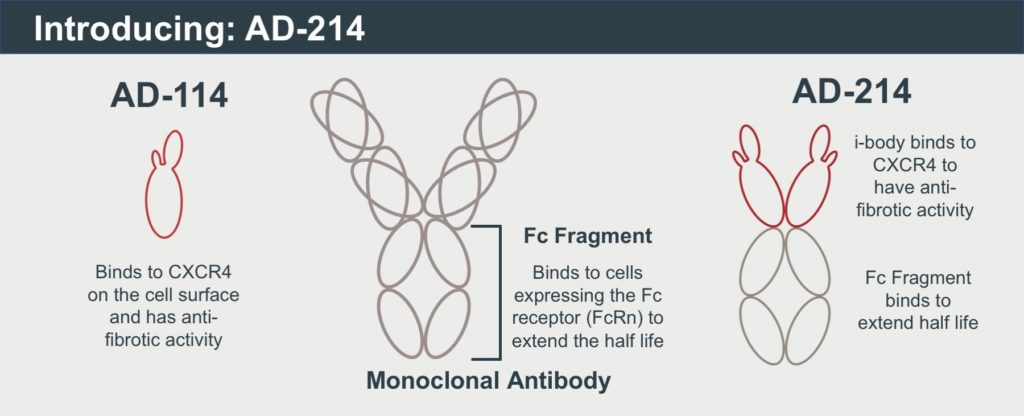
  • AD-214 retains unique therapeutic benefits of AD-114, but with greater potency and significantly improved half-life
  • New design combines the i-body with an Fc fragment that enables the drug to stay in the body for longer, benefitting patients


Australian biotech AdAlta (ASX: 1AD) today announced major improvements to the design of its preclinical i-body therapy for lung fibrosis, AD-114, which has significantly enhanced the drug’s potency and extended its half-life.

AdAlta has called its improved AD-114 molecule AD-214.

AD-214 contains two AD-114 i-body molecules at its front end, to increase its ability to bind to its human target, CXCR4, where it exerts its therapeutic effect. The addition of the Fc fragment (the tail region of a traditional monoclonal antibody) extends AD-214’s half-life, or duration of time in which it will stay in the body.

AdAlta CEO Sam Cobb said the Company will progress AD-214 into a Phase I clinical trial in the second half of 2019. Accordingly, the Company will prioritize development of AD-214 and halt further expenditure on manufacturing the current AD-114 molecule.

“AD-214 will ultimately be of greater benefit to future patients and potential commercial partners,” Cobb said.

“An increased half-life results in significantly less frequent dosing and therefore a more desirable and acceptable outcome for patients leading to greater drug compliance.  Less frequent dosing is considered important for patients and their physicians when treating fibrotic diseases.

“AD-214 will widen the commercial interest when we progress our partnering discussions.  Although the redesign of AD-114 into the new Fc-Fusion molecule AD-214 delays us from entering human clinical trials by around 12 months, AdAlta believes the timeline associated with this new molecule is more than offset by its broader clinical utility in a wider range of fibrotic diseases outside of Idiopathic Pulmonary Fibrosis”.

Dr Robert Peach, AdAlta’s Non-Executive Director who has a long history in the development of commercially available biologic drugs, including the Fc-Fusion drug blockbuster Orencia commented, “The data on AdAlta’s CXCR4 i-body antagonist is extremely encouraging for the treatment of multiple fibrotic diseases, including NASH, and age related macular degeneration.

“We have been able to leverage all the work done to date on AD-114 in the development of AD-214.  This means we can make use of our existing strong data package and retain orphan drug status for treatment of idiopathic pulmonary fibrosis.  We expect AD-214 will deliver increased commercial and therapeutic benefits in multiple fibrotic conditions, combined with the strong commercial precedent of existing mainstream drugs developed using the Fc-Fusion route reinforces the validity of this approach.”

There are greater than 70 antibodies currently on the market and eleven FDA approved Fc-Fusion proteins. There is a straightforward method of manufacturing and consequently it is expected that costs of goods can be reduced for AD-214 due to less frequent dosing and a well understood manufacturing pathway.

Learn more about AD-214 here, check out AdAlta’s latest company presentation and listen to an interview with CEO Sam Cobb.

AdAlta will also be holding Shareholder Briefing Sessions in Melbourne, Brisbane, Perth and Sydney in April, find out more information here.

Publication of AD-114 Demonstrates Anti-Fibrotic Effects in Preclinical Models of Lung Fibrosis

AdAlta, the Melbourne-based biotechnology company advancing AD-114 towards the clinic, today announces the publication of preclinical data in models of pulmonary fibrosis, generated in collaboration with the Cedars-Sinai Medical Centre in the US.

The publication titled ‘Anti-fibrotic Effects of CXCR4-Targeting i-body AD-114 in Preclinical Models of Pulmonary Fibrosis‘ appeared in Scientific Reports, an online, open access journal from the publishers of Nature.

In this pivotal pre-clinical dataset, researchers from AdAlta Ltd (La Trobe University, Australia), The Alfred Hospital (Melbourne, Australia) and Cedars-Sinai Institute (California, USA) show that the i-body AD-114 selectively targets and binds to CXCR4, a protein expressed at higher levels in patients with lung fibrosis. CXCR4 is believed to play a role in the recruitment of fibrotic cells to the lung, which is thought to contribute to the progression of lung fibrosis. Lung fibrosis, also referred to as idiopathic pulmonary fibrosis, or IPF, is a debilitating and life-limiting disease that causes irreversible scarring of lung tissue. The cause is unknown, and the scarring continues to worsen over time, making it difficult to breathe.

The prognosis of IPF is very poor with a median survival of only three to five years. Currently, there are just two treatments for IPF – Pirfenidone and Nintedanib – approved for use in Australia. These drugs are not curative but slow the disease progression, and patients tend to discontinue use due to severe side effects. AD-114 works on different pathways to both existing treatments for IPF.

La Trobe researcher and biochemist Dr Kate Griffiths, who was one of the first developers of the i-body technology and co-author of the paper, said:

“We are very excited with the research results, demonstrating that we can apply the i-body to an area of seriously unmet therapeutic need.”

“Our data add to the small but robust and growing body of literature showing that CXCR4 is an important alternative target for treating IPF and other fibrotic diseases. We have been able to show that the i-body AD-114 binds to lung tissue from IPF patients, and that the i-body blocks migration of some of the cells that are implicated in fibrosis without influencing or impacting the healthy cells. In an animal model, we have shown that the i-body has a protective effect on an artificially induced form of lung fibrosis.

“Unfortunately there is no cure for IPF as the scarring of the lung tissue is irreversible. With limited therapeutic options available to patients worldwide, there is a significant unmet medical need in the treatment of this rare lung disease. Our data however, clearly demonstrate the therapeutic potential of the i-body in the case of IPF and show strong promise as a future therapeutic option.”

AdAlta’s Chief Scientific Officer, Associate Professor Mick Foley, who also co-authored the paper and is an inventor of the i-body lead candidate AD-114, said:

“What is most remarkable about our i-bodies is their incredible specificity and affinity with their target, as these data show. Unlike existing treatments for IPF which have an unknown or very broad mode of action, the mechanism of action AD-114 is exquisitely specific and well understood and the new drug could potentially bring the progression of the disease to a grinding halt.”

AdAlta will be completing the final preclinical toxicology studies before moving AD-114 into the clinic, completing an initial first-in-human study in healthy volunteers in 2018.

Learn more about AD-114 and the platform technology from which AD-114 was developed, the i-body.


The commercial potential of targeting the complex proteins GPCRs and ion channels

Drugging the undruggable: AdAlta’s 2018 special investor and analyst briefing

On 2nd February 2018, AdAlta brought together some of the world’s leading researchers and experts in drug development to debate the drug discovery landscape of today and where the greatest opportunities lie.

In our short highlights video from the day, you’ll hear why experts like Receptos founder Dr Robert Peach, portfolio manager Bianca Ogden and Anthony Brown are excited about the commercial opportunity in AdAlta’s next generation antibody platform, called an ‘i-body’, and our lead drug candidate AD-114.

The day was presented with an investor and analyst audience in mind; information on what is a deeply complex topic was presented in an easy-to-digest format, ensuring that our audience walked away understanding the true value of what was being discussed.

We had a particular focus on some of the complex proteins thought to contribute to various diseases, called G-coupled protein receptors (GPCRs) and ion channels. Both types of proteins represent large classes for potential therapeutic intervention, and yet they remain difficult to target by small molecule and traditional antibody therapeutics.

Our i-body AD-114 targets the GPCR implicated in fibrosis, and has shown compelling potential as a new treatment for idiopathic pulmonary fibrosis (IPF, otherwise simply referred to as lung fibrosis).


Individual Speaker Presentations 

Dr Bianca Ogden – Portfolio Manager, Platinum Asset Management ‘Drug discovery, next generation antibodies: the landscape, the problems and the solutions’

Professor Carol Pollock – Professor Medicine ‘Ion Channels: what is an ion channel and the drug discovery opportunity for the treatment of fibrosis’

Dr Mick Foley – Chief Scientific Officer, AdAlta ‘GPCRs: unique pharmacology of the i-body and what this means therapeutically’

Dr Anthony Brown – WG Partners ‘Development of drugs that target GPCRs and ion channels: the commercial opportunity and therapeutic potential’

Panel Discussion featuring world-leading drug developers Dr Brian Richardson, Dr John Westwick and Dr Robert Peach

An update on the progress of AdAlta’s lead candidate, AD-114, was also provided by CEO Sam Cobb.

CEO Sam Cobb speaks to Health Invest TV

While AdAlta CEO and Managing Director Sam Cobb was in San Francisco earlier this year to present at Biotech Showcase (JP Morgan Healthcare Conference), she was interviewed by Health Invest TV about the enormous commercial potential of our lead i-body candidate, AD-114.

AdAlta is developing AD-114 for treatment of fibrosis, and idiopathic pulmonary fibrosis (IPF, which is fibrosis of the lung) in particular. There is a high unmet medical need for IPF treatments, and AD-114 has been granted orphan drug status by the FDA to fast-track its development and approval. AD-114 will begin human trials this year.

“There are two products available for the treatment of IPF and they have significant side effects, they work with a limited number of people, and they really slow the disease, they’re not really a cure for the disease,” Sam said.

“AD-114 works in a very different way, it has a very different mechanism of action, and it provides patients an alternative treatment that potentially has a better outcome for them, which we’ll be looking to test.”

Sam explained that deals in the fibrosis space typically occurred much earlier in the clinical development of assets when compared to other disease areas because of high unmet patient need.

“There’s a significant amount of activity in terms of deals in the fibrosis space,” Sam said. “We’ve seen over the last four to five years a lot of assets being acquired at the end of Phase I – where we’ll be at the end of this year – and they’re acquired for significant upfront and milestone payments, $100 million upfront and between four and five hundred million in milestone payments for a single asset at that stage.

“More recently we’ve also seen significant uplifts in market value for companies that progress in phase 2 studies.”

Researcher looks to next generation antibody treatment for Chronic Kidney Disease

A national medical grant has been awarded to fund research into the use of a next generation antibody therapy to treat Chronic Kidney Disease.

Professor Carol Pollock from the University of Sydney has been awarded $768,000 from the National Health and Medical Research Council (NHMRC) to evaluate the drug, AD-114, being developed by the Australian biotech AdAlta (ASX:1AD).

The project grant, titled “A novel and unique protein i-body for the treatment of Chronic Kidney Disease through targeting CXCR4” will begin on 1 January 2018 and run over four years.

The grant will provide non-dilutive funding to build on the initial work completed by the Kolling Institute and University of Sydney that demonstrated the anti-fibrotic effects of AD-114 in the kidney via a different mechanism of action from currently-approved therapies.

AD-114 has the potential to provide a novel treatment for Chronic Kidney Disease, which currently affects an estimated 1.7 million Australians.

AD-114 differs from existing treatment options and others currently in clinical development as it binds to the chemokine receptor CXCR4. The target CXCR4 is expressed at low levels or absent in healthy tissue and is increased and at high levels in tissue affected by a number of disease states, including fibrosis. AD-114 is the only anti-CXCR4 drug candidate being developed for the treatment of fibrosis.

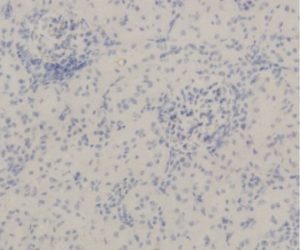
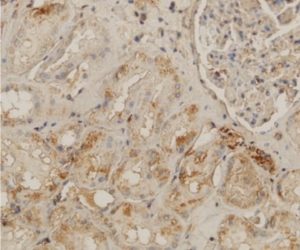
In both pictures the i-body drug target CXCR4 is stained. The normal kidney cells (left) have no staining, ie CXCR4 is not present. In the diabetic kidney (right) there is significant brown staining, ie the drug target CXCR4 is increased. AdAlta’s i-body AD-114 specifically binds to CXCR4 – and therefore will have activity in diabetic kidney disease and is a promising therapeutic for the treatment of renal fibrosis.

AdAlta’s CEO, Sam Cobb said: “The research collaboration with the Kolling Institute and University of Sydney has provided the opportunity to expand the AD-114 pre-clinical package; demonstrating anti-fibrotic effects across a range of fibrotic diseases, which will be important to potential pharmaceutical partners. We are looking forward to further developing AD-114 for Chronic Kidney Disease, providing an additional clinical application which further enhances the value of AD-114.”

Professor Carol Pollock added “An increase in diabetes and obesity across the world is leading to a massive surge in the number of people diagnosed with CKD. The medical community is looking for alternate treatment options to treat CKD, highlighting the importance of research funding to evaluate new clinical targets. We are excited by the opportunity to further evaluate CXCR4’s involvement and this novel i-body for the treatment of Chronic Kidney Disease”.

AdAlta to present at the Biotech Showcase in San Francisco

AdAlta Limited (ASX: 1AD), the biotechnology Company advancing its lead i-body candidate towards clinical development, today announced that CEO, Samantha Cobb would present at the Biotech Showcase™, to be held between 8–10 January, during the most important week in the annual meeting calendar for healthcare companies.

Presentation details

Date:     Wednesday 10 January

Time:    The presentation will occur at 9:30 am PST

Room:  Franciscan A, Level Ballroom Level

Venue: Hilton Hotel Union Square, 333 O’Farrell Street, San Francisco

A copy of the presentation is available here.

CEO, Sam Cobb, said, “2018 is going to be a big year for AdAlta as we move our lead program AD-114 into the clinic for the treatment of orphan disease, Idiopathic Pulmonary Fibrosis.  AdAlta represents a strong investment opportunity for investors at this stage, given the precedent for deals in the fibrosis area. It is an excellent time for us to present in front of the US audience.”

Biotech Showcase™, produced by Demy-Colton and EBD Group, is an investor and networking conference devoted to providing private and public biotechnology and life sciences companies with an opportunity to present to, and meet with, investors and pharmaceutical executives in one place during the course of one of the industry’s largest annual healthcare investor conferences, J.P. Morgan Annual Healthcare Conference.

Sara Demy-Colton, CEO of Demy-Colton, said: “We are delighted that AdAlta will be presenting at the Biotech Showcase this year. Biotech Showcase is the perfect platform for life science companies to showcase their innovation and seek out their next deal.  This year again we are thrilled to be hosting what we believe will be the great business development opportunity of 2018.”

Any investors that wish to meet with Sam Cobb during the conference can make contact through the partnering system, or via the contact details provided below.

AdAlta Limited
Sam Cobb, CEO
Tel: +61 (0)3 9479 5159
E: s.cobb@adalta.com.au

Follow AdAlta on Twitter: @AdAltaCEO | follow Biotech Showcase on Twitter: @EBDGroup and @Demy_Colton – #BiotechShowcase.

Morgans Interview with CEO Sam Cobb

AdAlta Managing Director and CEO Sam Cobb was recently interviewed by Morgans Senior Analyst Scott Power, discussing both the milestones achieved by AdAlta in 2017 and the exciting times ahead as lead candidate, AD-114, moves into the clinic.